Category: News

  • Autoimmune diseases and metal implants and devices

    Autoimmune diseases and metal implants and devices

    [vc_row][vc_column][vc_column_text]

    Introduction to autoimmune disease and metal in medical and dental implants and devices

    Researchers have identified that autoimmune disease can be caused by a combination of

    1) genetic components, and 2) metals (including those used in medical and dental implants and devices), pharmaceutical drugs, pollen, infectious agents, molds, and food allergies (such as gluten). There are now over 80 recognized autoimmune diseases, with some of the most common being diabetes, lupus, multiple sclerosis, rheumatoid arthritis, and celiac disease.

    In the US, estimates of people afflicted by these debilitating health conditions range from 14.7 million to 50 million. It is important to note that the number of people suffering from autoimmune disease is increasing, and the use of medical and dental implants and devices containing metal is likewise increasing.[/vc_column_text][/vc_column][/vc_row][vc_row][vc_column][vc_column_text]

    Autoimmune diseases associated with metal in medical and dental implants and devices

    While numerous health conditions have been related to the presence of metals in the body, scientific research has clearly shown that autoimmune disease can be associated with metals used in dentistry and medicine, including metals in medical and dental implants, devices, and adjuvants (substances added to vaccines such as aluminum and mercury). Several of the autoimmune diseases studied for their relation to metal in medical and dental implants, devices, and adjuvants include the following:[/vc_column_text][/vc_column][/vc_row][vc_row equal_height=”yes” css=”.vc_custom_1565417010988{padding-top: 20px !important;padding-bottom: 20px !important;}”][vc_column][vc_single_image image=”3218″ img_size=”full” alignment=”center”][/vc_column][/vc_row][vc_row][vc_column][vc_column_text]

    Sources of metal exposure from medical and dental implants and devices related to autoimmune disease

    Some metals are recognized as essential to human life and serve important roles within the human body. However, the beneficial effects of trace elements are based on safe and adequate intake levels, with too little resulting in deficiencies and too much resulting in toxicities.

    Other metals used as components in medical and dental implants, devices, and adjuvants have no established function in the human body. In addition to aluminum, which is both a neurotoxin and an immune stimulator, these include gold, mercury, nickel, palladium, platinum, silver, and titanium. Mercury is recognized as being toxic to humans even in low doses, and researchers have identified chromium, cobalt, copper, gallium, gold, iron, lead, manganese, mercury, nickel, platinum, silver, tin, vanadium, and zinc (among others) as metals of concern due to residential and occupational exposure.

    Thus, medical and dental implants and devices placed directly into the human body merit significant consideration when evaluating the impact of metal exposure levels, especially in susceptible populations.[/vc_column_text][/vc_column][/vc_row][vc_row][vc_column][trx_button size=”medium” icon=”icon-book” color=”#ffffff” bg_color=”#3fb6e0″ align=”center” link=”http://holisticdentaladvisors.com/wp-content/uploads/2019/08/Metals-Dentistry-Medicine-Chart.pdf”]CLICK HERE TO SEE A CHART OF METALS USED IN DENTISTRY AND MEDICINE.[/trx_button][/vc_column][/vc_row][vc_row][vc_column][vc_column_text]In some genetically susceptible individuals, metals can trigger allergies, and recent studies and reports tend to agree that metal allergies are on the rise. Clinical screening for metal allergy has been recommended, but the importance of patients reporting reactions to metals to their doctors has also been emphasized in the scientific literature.[/vc_column_text][/vc_column][/vc_row][vc_row][vc_column][vc_column_text]

    In addition to reporting any rashes from jewelry, watches, or other metal exposures, it is essential for each patient to recognize the gamut of symptoms that can be related to the presence of a metallic medical or dental implant or device in their body, such as the development of an autoimmune disease. It is also vital for patients to remember that sensitization to metal can develop years after a medical or dental implant or device has been placed and that adverse effects can occur with or without the sign of a rash or eruption on the skin or in the mouth.

    [/vc_column_text][/vc_column][/vc_row][vc_row][vc_column][vc_column_text]

    Removal of medical and dental implants and devices containing metal and potential recovery from autoimmune disease

    Removal of medical and dental implants and devices that contain metal is an obvious course of action when adverse effects occur. Indeed, the scientific literature is abundant with studies and cases of individuals improving or recovering from autoimmune disease usually within a year or two after removal of the offending metal. In addition to metal-containing dental implants and devices, examples of materials containing metal removed include the copper IUD, nickel tubal ligation clips, and titanium screws and skull plates.

    Some of health conditions that improved (or from which patients even recovered) after removal of metal medical and dental implants and devices include a variant of amyotrophic lateral sclerosis (Lou Gehrig’s Disease) known as progressive muscular atrophy, autoimmune thyroiditis, chronic fatigue syndrome, Crohn’s disease, fibromyalgia, multiple sclerosis, oral lichen planus, Sjögren’s syndrome, and systemic lupus erythematosus.

    [/vc_column_text][/vc_column][/vc_row][vc_row][vc_column][trx_button size=”medium” icon=”icon-book” color=”#ffffff” bg_color=”#3fb6e0″ align=”center” link=”http://holisticdentaladvisors.com/wp-content/uploads/2019/08/Table-Autoimmunity-Metal-Removal.pdf”]CLICK HERE TO SEE A TABLE OF SOME OF THE RESEARCH DOCUMENTING IMPROVEMENT IN AN ARRAY OF AUTOIMMUNE DISEASES UPON METAL IMPLANT AND/OR DEVICE REMOVAL.[/trx_button][/vc_column][/vc_row][vc_row equal_height=”yes” css=”.vc_custom_1565419904326{padding-top: 50px !important;padding-bottom: 50px !important;background-color: #3fb6e0 !important;}”][vc_column][vc_single_image image=”3221″ img_size=”full” alignment=”center”][vc_empty_space height=”10px”][vc_separator color=”white” border_width=”2″][vc_empty_space height=”10px”][vc_column_text]The late Vera Stejskal, PhD, studied the link between autoimmune disease and metals in medical and dental implants and devices. Her life’s work, which chronicled cases of recovery after safe removal of medical and dental implants and devices containing metal, is featured in this article.[/vc_column_text][/vc_column][/vc_row][vc_row][vc_column][vc_column_text]In 1994, Dr. Vera Stejskal introduced the MELISA test, an alternative to patch testing for allergies designed to test for type IV delayed hypersensitivity to metals, including sensitivity to mercury. Much of Dr. Stejskal’s work involved using the testing to help diagnose patients with reactions to metals, thus facilitating the decision to have the medical and dental implants and devices containing metal safely removed and replaced with safer alternatives, and then, recording the health outcomes, the majority of which have involved significant improvement. Dr. Stejskal had a number of research articles published that included the science behind her work and the health improvements experienced by many of the patients.

    In her research, Dr. Stejskal further warned about removing metal-containing medical and dental implants and devices safely. This is because an unsafe removal process of metal implants can cause serious injury (and even death) to the patient, in addition to the possibility of increased metal exposure.

    Based on scientific research, the International Academy of Oral Medicine and Toxicology (IAOMT) has developed recommendations known as the Safe Mercury Amalgam Removal Technique (SMART) to assist in mitigating the potential negative outcomes of mercury exposure during amalgam removal. The IAOMT also offers education about alternatives to amalgam fillings so that patients can opt for a more “biocompatible” replacement, such as metal-free, ceramic options.

    It is important to note that while many patients improve or even recover from autoimmune disease after the removal of a metal medical and dental implant or device, there are some who do not. One obvious reason for this is if the patient is still being exposed to the metal or a different sensitizer through another implant, device, adjuvant, or other source. Additional impediments in achieving improved health can include the presence of another illness and/or allergy, the need to eradicate Heliobacter pylori, exposure to certain pesticides, solvents, molds, and foods, hormonal imbalances, stress, smoking, a sedentary lifestyle, and countless other factors.

    For all these reasons and more, it is imperative for patients battling autoimmune disease to work with their doctors and other healthcare professionals so that toxins and allergens such as metal medical and dental implants and devices are kept out of their bodies and healthier, safer options are put in to replace them.

    For more information about the research of Dr. Vera Stejskal[/vc_column_text][/vc_column][/vc_row][vc_row][vc_column][trx_button size=”medium” icon=”icon-book” color=”#ffffff” bg_color=”#3fb6e0″ align=”center” link=”http://holisticdentaladvisors.com/wp-content/uploads/2019/08/Metal-Implants-and-Autoimmunity.pdf”]CLICK HERE TO DOWNLOAD A MORE DETAILED VERSION OF THIS DOCUMENT WITH SCIENTIFIC REFERENCES.[/trx_button][/vc_column][/vc_row]
  • Dentists find high mercury levels when removing amalgam

    Dentists find high mercury levels when removing amalgam

    [vc_row][vc_column][vc_column_text]July 30, 2019 — Mercury exposure during amalgam removal procedures may be seven times higher than the limits recommended by some occupational safety organizations, a new study has found. The research findings suggest minuscule amalgam particles may be able to generate staggering amounts of mercury vapor.

    Four general dentists from the U.S. and Canada were worried that conventional testing methods did not adequately measure the mercury vapor emitted from amalgam particulate, the tiny particles generated when an amalgam restoration is removed with a high-speed drill. The dentists conducted their own study to measure this hidden mercury source and were shocked by the results. They published their findings in the Journal of Occupational Medicine and Toxicity (July 17, 2019).[/vc_column_text][/vc_column][/vc_row][vc_row equal_height=”yes” css=”.vc_custom_1565418333530{padding-top: 20px !important;padding-bottom: 20px !important;}”][vc_column width=”1/2″][vc_single_image image=”3204″ img_size=”full”][/vc_column][vc_column width=”1/2″][vc_column_text]

    David Warwick, DDS.

    “We had a pretty good idea that there was another [mercury] source that the industry hadn’t considered, but we were very surprised at the levels that came off the particulate,” lead study author David Warwick, DDS, a dentist from Alberta, Canada, told DrBicuspid.com. “We were more shocked at how long the particulate emitted the mercury vapor. There were some samples that had significant levels even after four hours!”

    High-speed drills generate friction, increase the heat of amalgam, and release minuscule particles known as volatilizing amalgam particulate. Dr. Warwick describes this particulate as “sawdust” that can emit far higher concentrations of mercury vapor per mass than the elemental form.[/vc_column_text][/vc_column][/vc_row][vc_row equal_height=”yes” css=”.vc_custom_1565418333530{padding-top: 20px !important;padding-bottom: 20px !important;}”][vc_column][vc_column_text]To better estimate the amount of mercury vapor dentists may be exposed to from this particulate, Dr. Warwick and colleagues swabbed the head of a dental drill after removing amalgam fillings from 21 patients. A mercury vapor testing machine then analyzed the amount of mercury coming off the swabs.

    Nine of the 21 swabs showed peak mercury values above the safety thresholds set by the U.S. National Institute for Occupational Safety and Health (NIOSH) and Alberta Occupational Health and Safety (AOHS).[/vc_column_text][/vc_column][/vc_row][vc_row][vc_column][vc_single_image image=”3210″ img_size=”full” alignment=”center”][/vc_column][/vc_row][vc_row equal_height=”yes” css=”.vc_custom_1565418333530{padding-top: 20px !important;padding-bottom: 20px !important;}”][vc_column][vc_column_text]At its peak, the highest vapor concentration reached nearly 900 µg/m3, more than seven times the NIOSH and AOHS safety limits. In addition, multiple samples continued emitting mercury vapor levels above the recommended ceiling for more than four hours.

    “It is clear that dental particulate generated from drilling amalgam fillings produces mercury vapor at levels of concern over a substantial period of time that can breach threshold levels and that this needs to be considered in occupational safety strategies,” the study authors wrote.

    Shortcomings of safety limits

    Dr. Warwick believes volatilizing amalgam particulate is a hidden source of mercury that conventional testing methods may not adequately measure. He was partly inspired to look for such a source when he broke out in rashes and lesions.

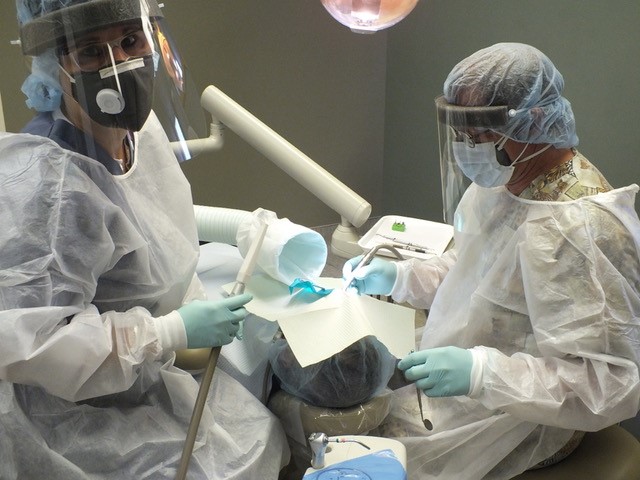
    “I had suffered from skin rashes and lesions on my forearms off and on for the last 20 years,” Dr. Warwick said. “I am convinced now that this was from the mercury particulate as I have not had any issues since I have been using appropriate barriers.”[/vc_column_text][/vc_column][/vc_row][vc_row][vc_column][vc_single_image image=”3214″ img_size=”full” alignment=”center”][/vc_column][/vc_row][vc_row equal_height=”yes” css=”.vc_custom_1565418333530{padding-top: 20px !important;padding-bottom: 20px !important;}”][vc_column][vc_column_text]Dr. Warwick and colleague wear protective gear during an amalgam removal procedure. Image courtesy of Dr. David Warwick.

    While the samples exceeded amalgam thresholds set by NIOSH and AOHS, they fell below the ceiling set by the U.S. Occupational Safety and Health Administration (OSHA), which measures average mercury exposure over an eight-hour time period. Dr. Warwick disagrees with this calculation.
    “OSHA has stated that their ceiling level of 100 µg/m3 is actually a time-weighted number over eight hours,” he said. “It is very confusing because I don’t believe that this level is ever going to be protective over an eight-hour period.”

    It is also important to note that the NIOSH and AOHS safety ceilings are meant for general exposure. This particular form of mercury may not qualify for those safety thresholds, the authors cautioned. When asked for comment, NIOSH stated the organization does not currently have an expert on this subject area.

    The ADA maintains that amalgam restorations are safe, affordable, and durable. The association does not recommend removing mercury-containing dental amalgam unless there is a medical or dental reason for doing so.
    “It has been studied and reviewed extensively,” the ADA wrote in a statement to DrBicuspid.com. “Amalgam restorations have not been found to be associated with adverse health effects.”[/vc_column_text][/vc_column][/vc_row][vc_row][vc_column][vc_column_text]Safety in the practice

    The protective strategies we used are far more comprehensive than most dental offices and — more concerning — almost all dental schools.

    — David Warwick, DDS

    Dr. Warwick recommended that dentists and dental schools strictly follow existing regulations for removing amalgam restorations. This includes using copious amounts of water and high-volume suction, cross-hatching the material before removal, and providing effective barriers and inhalation protection.

    He also advised disposing protective clothing after amalgam removal procedures. The particulate swabbed from the drill is only a fraction of the amount that can be released. The remaining particulate can land on the hands, arms, face, and neck or even be inhaled.

    Since conducting this study, Dr. Warwick and his co-authors have been experimenting with new forms of protection, such as polyethylene gowns and mercury-rated face masks. However, Dr. Warwick doesn’t believe the problem will be solved until dentists stop using mercury-based fillings altogether. After all, he and his colleagues followed all the recommended steps and still found high mercury vapor readings.

    “The protective strategies we used are far more comprehensive than most dental offices and — more concerning — almost all dental schools,” Dr. Warwick said. “The first thing [to do] would be to stop putting this material in people’s mouths, stop teaching it as a default posterior filling material in school, and start teaching the proper way to use more superior alternatives.”[/vc_column_text][/vc_column][/vc_row]

  • ORAL HEALTH INTEGRATION AND BIOLOGICAL DENTISTRY

    ORAL HEALTH INTEGRATION AND BIOLOGICAL DENTISTRY

    [vc_row][vc_column][vc_empty_space height=”20px”][vc_video link=”https://youtu.be/IVPVAS26Y8A”][vc_empty_space height=”20px”][/vc_column][/vc_row][vc_row equal_height=”yes” css=”.vc_custom_1565417010988{padding-top: 20px !important;padding-bottom: 20px !important;}”][vc_column width=”1/4″][vc_single_image image=”3191″ img_size=”full”][vc_column_text]IAOMT promotes oral health integration[/vc_column_text][/vc_column][vc_column width=”3/4″][vc_column_text]While periodontal disease is accepted by the medical community for its role in cardiovascular problems and diabetes, the effects of other dental conditions and materials on whole body health have yet to be extensively recognized. However, since the mouth is the gateway to the digestive tract, it should not be surprising that what happens in the oral cavity impacts the rest of the body (and vice versa, as in the case of diabetes). Although it might seem obvious that dental conditions and materials can influence the entire human system, there is a clear need for the mainstream medical community, policy makers, and the public to be educated about this reality.[/vc_column_text][/vc_column][/vc_row][vc_row][vc_column][vc_column_text]

    Biological Dentistry and Oral Health Integration

    Biological dentistry is not a separate specialty of dentistry, but a thought process and an attitude that can apply to all facets of dental practice and to health care in general: to always seek the safest, least toxic way to accomplish the goals of modern dentistry and of contemporary health care and to recognize the essential connections between oral health and overall health.  The tenets of biological dentistry can inform and intersect with all topics of conversation in health care, as the well-being of the mouth is an integral part of the health of the whole person.

    Biological dentists encourage the practice of mercury-free and mercury-safe dentistry and aim to help others understand what these terms actually mean in clinical application:

    • “Mercury-free” is a term with a wide-range of implications, but it typically refers to dental practices that do not place dental mercury amalgam fillings.
    • “Mercury-safe” typically refers to dental practices that use innovative and rigorous safety measures based on up-to-date scientific research to limit exposure, such as in the case of removing previously existing dental mercury amalgam fillings and replacing them with non-mercury alternatives.
    • “Biological” or “Biocompatible” dentistry typically refers to dental practices that utilize mercury-free and mercury-safe dentistry while also considering the impact of dental conditions, devices, and treatments on oral and systemic health, including the biocompatibility of dental materials and techniques.

    In addition to consideration for the risks of mercury fillings and biocompatibility of dental materials (including the utilization of allergy and sensitivity testing), biological dentistry further addresses heavy metals detoxification and chelation, nutrition and oral cavity health, oral galvanism, risks of topical and systemic fluoride exposure, the benefits of biological periodontal therapy, the influence of root canal treatments on patient health, and the diagnosis and treatment of neuralgia inducing cavitational osteonecrosis (NICO) and jawbone osteonecrosis (JON).

    Within our membership, IAOMT dentists have varying levels of training in mercury-free, mercury-safe, and biological dentistry. Click here to learn more about biological dentistry.[/vc_column_text][/vc_column][/vc_row][vc_row][vc_column][vc_column_text]

    Evidence of Need for Oral Health Integration

    A number of recent reports have clearly established the urgency for oral health to be better integrated into public health. In fact, Healthy People 2020, a project of the U.S. government’s Office of Disease Prevention and Health Promotion, has identified a key area of public health improvement: to increase awareness of the importance of oral health to overall health and well-being.1

    One reason for this needed awareness is that millions of Americans have dental caries, periodontal disease, cleft lip and palate, oral and facial pain, and oral and pharyngeal cancers.2 The potential consequences of these oral conditions are far-ranging. For example, periodontal disease is a risk factor for diabetes, heart disease, respiratory disease, stroke, premature births, and low birth weights.3 4 5 Additionally, oral health problems in children can lead to attention deficits, difficulty in school, and dietary and sleep issues.6 Also, oral health problems in older adults can lead to disability and reduction in mobility.7 These are only a few examples of the known repercussions of impaired oral health on overall health.

    In their 2011 report Advancing Oral Health in America, the Institute of Medicine (IOM) made the necessity of inter-professional health collaboration clear. In addition to improving patient care, the integration of oral health with other disciplines was recognized as a means of reducing health care costs.8 Further, the IOM warned that the separation of dental professionals from other health care professionals negatively influences patients’ health.9 More precisely, Chairman of the Committee on Oral Health Initiative Richard Krugman stated: “The oral health system still largely depends on a traditional, isolated dental care model in the private practice setting—a model that does not always serve significant portions of the American population well.”10

    The reality of patients enduring harmful consequences as a result of oral health being excluded from medical programming has been confirmed in other reports. In a commentary published in the American Journal of Public Health, Leonard A. Cohen, DDS, MPH, MS, explained that patients suffer when there is no connection between the dentist and physician.11 Interestingly, it has been reported that patients want this connection to made, as researchers have noted: “As interest in integrative health care and the use of complementary and alternative therapies by consumers has continued to grow, concern has increased that health professionals be sufficiently informed about integrative health so that they can effectively care for patients.”12

    It is obvious that patients and practitioners mutually benefit from an integrated approach to oral health and public health. First, oral health conditions can be indicative of other health problems including nutritional deficiencies, systemic diseases, microbial infections, immune disorders, injuries, and some forms of cancer.13 Next, patients enduring adverse symptoms from oral health conditions such as infections, chemical sensitivities, TMJ (temporomandibular joint disorders), craniofacial pain, and sleep disorders can benefit from inter-professional collaboration. Such collaboration has also been called for in regard to oral complications from cancer treatments and other medications14 and in regards to biocompatible materials.15 Biocompatibility is especially crucial because dental mercury allergies can result in an array of subjective and objective health complaints16 and impact as many as 21 million Americans today.17 However, these figures could be even higher because recent studies and reports suggest that metal allergies are on the rise.18 19[/vc_column_text][/vc_column][/vc_row][vc_row][vc_column][vc_column_text]

    Essential Improvements for Oral Health Integration

    All of these circumstances and more provide evidence that oral health issues must become more prevalent in medical education and training.  Because dental schools and education are completely separate from medical schools and continuing education, physicians, nurses, and other health care professionals are often not knowledgeable about oral health care, including recognition of oral diseases.20  In fact, it has been reported that only 1-2 hours per year of family medicine programs are allotted for dental health education.21

    The lack of education and training has wide-ranging implications for public health.  In addition to all of the conditions and scenarios mentioned above, other consequences might not be as obvious.  For instance, most patients with dental complaints seen by hospital emergency departments (ED) are usually suffering from pain and infection, and the lack of ED knowledge about oral health has been cited as a contributor to opiate dependency and antibiotic resistance.22

    This lack of awareness appears to be due to lack of opportunity.  While practitioners have demonstrated interest and training about oral health, this topic has traditionally not been offered in medical school curricula.23  However, changes have been encouraged, such as Chairman of the Committee on Oral Health Initiative Richard Krugman’s advice: “More needs to be done to support the education and training of all health care professionals in oral health care and to promote interdisciplinary, team-based approaches.24

    The encouragement for such urgent changes appears to be having an effect.  Some innovative examples of existing models and frameworks are forging a new future in the integration of oral and public health.  The IAOMT is part of this new future and promotes active cooperation between dentists and other health professionals so that patients can experience a more optimum level of health.[/vc_column_text][/vc_column][/vc_row][vc_row][vc_column][trx_button size=”medium” icon=”none” color=”#ffffff” bg_color=”#3fb6e0″ align=”center” link=”http://holisticdentaladvisors.com/wp-content/uploads/2019/08/Intro-to-Biological-Dentistry.pdf”]CLICK HERE FOR A MORE DETAILED VERSION OF THIS DOCUMENT WITH SCIENTIFIC REFERENCES[/trx_button][/vc_column][/vc_row]

  • WATCH: VIDEO SHOWS WHAT MERCURY DOES TO A BRAIN NEURON IN JUST 20 MINUTES

    WATCH: VIDEO SHOWS WHAT MERCURY DOES TO A BRAIN NEURON IN JUST 20 MINUTES

    [vc_row css=”.vc_custom_1565415529091{padding-top: 20px !important;padding-bottom: 20px !important;}”][vc_column][vc_column_text]One of the most serious byproducts of modern living is the inundation of the human body and natural environment with toxic chemicals and substances used in medical and consumer products. Just under our noses are a ton of toxic materials, and when you look at the ingredients of pharmaceuticals and contaminants in foods, you see that people are consuming a ton of dangerous substances.

    Take for instance mercury, a dangerous heavy metal that is commonly used in light bulbs, batteries, and other electronics, is widely used in dental filling and is also an ingredient in many vaccines. As our society attempts to understand the nature and causes of the growing epidemic of autism, which is affecting far too many children and families, many are pointing the finger to mercury poisoning and toxicity as a likely culprit.

    So what exactly does mercury do to healthy brain cells?

    Many scientists and concerned vaccine safety advocates are eager to answer this question. Vaccine awareness advocate Robert F. Kennedy Jr. comments on toxic heavy metals:[/vc_column_text][/vc_column][/vc_row][vc_row][vc_column][vc_column_text]

    In nature, toxic metals generally are bound with other elements rather than being present in their pure form. However, with the advent of large-scale industrial processes to extract metals from naturally occurring compounds, humans let the genie out of the bottle, contributing significantly to the distribution of mercury, aluminum and other heavy metals in the environment. When released from nature’s semi-protective hold, these “invariably toxic” metals wreak havoc on living systems, including humans, animals and plants alike.

    Modern-day scientists have been amassing evidence of mercury’s toxicity for decades, with a growing focus in recent years on the metal’s association with neurodevelopmental disorders, including autism spectrum disorder (ASD). A new review article in the multidisciplinary journal Environmental Research pulls together a wide body of literature with the aim of summing up current research and emerging trends in mercury toxicology. Geir Bjørklund, the study’s lead author, is the founder of Norway’s non-profit Council for Nutritional and Environmental Medicine and has published prolifically on topics related to heavy metals, autoimmune disorders and ASD.” ~Robert F Kennedy Jr.

    [/vc_column_text][/vc_column][/vc_row][vc_row][vc_column][vc_column_text]A study conducted at the University of Calgary looked at the effect that mercury has on brain neurons, photographing the effects and compiling a video of real-time results of mercury vs. your brain. In the study, entitled, How Mercury Causes Brain Degeneration, researchers looked at brain lesions in animals who had inhaled mercury vapor.[/vc_column_text][/vc_column][/vc_row][vc_row][vc_column][vc_empty_space height=”20px”][vc_column_text]

    “Mercury has long been known to be a potent neuro-toxic substance, whether it is inhaled, or consumed in the diet as a food contaminant.” [Source]

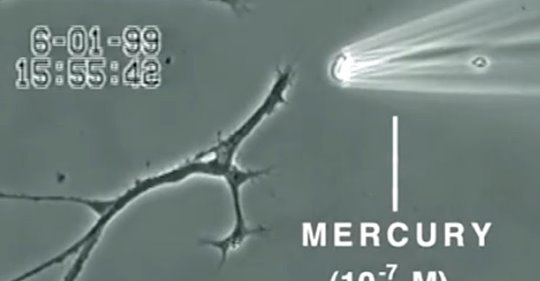
    [/vc_column_text][vc_empty_space height=”20px”][/vc_column][/vc_row][vc_row][vc_column][vc_column_text]The study recorded actual video of healthy snail brain cells growing, then introduced mercury into the culture, which caused rapid degeneration of the snail brain cells after just 20 minutes of direct exposure. The results are quite startling, especially when you consider the ramifications on human health, most notably children who are receiving doses of vaccines which may contain mercury.

    The results are seen in the video presentation below:[/vc_column_text][/vc_column][/vc_row][vc_row][vc_column][vc_empty_space height=”20px”][vc_video link=”https://youtu.be/85tgwh3HpsM”][vc_column_text]

    What do you think? Should we be more cautious about the things we put into our bodies and introduce into our environment?

    [/vc_column_text][vc_empty_space height=”50px”][/vc_column][/vc_row]

  • Could a Root Canal Be the Cause of Your Chronic Health Problem?

    Could a Root Canal Be the Cause of Your Chronic Health Problem?

    [vc_row css=”.vc_custom_1565414078862{padding-top: 20px !important;padding-bottom: 20px !important;background-color: #f0f0f0 !important;}”][vc_column][vc_column_text]

    STORY AT-A-GLANCE

    • Root canal treated teeth may harbor harmful microbes, the toxic metabolic waste products of which can have systemic health impacts and contribute to a variety of chronic diseases
    • The Netflix documentary “Root Cause” interviews doctors and dentists who believe many health problems can be traced back to these hidden dental infections
    • The key problem when you have a root canal performed is that the tooth has died but remains in the body. It’s well-known you cannot leave a dead organ in your body or it will cause severe infection
    • Even if the root of the tooth is thoroughly cleaned out, it’s physically impossible to get all the pathogens out of the microtubules, and the waste material from these bacteria is extremely toxic
    • Infection caused by a root canal has been linked to an increased risk of heart disease and cancer, but may play a role in many other conditions as well, including chronic fatigue and chronic pain

    [/vc_column_text][/vc_column][/vc_row][vc_row][vc_column][vc_empty_space height=”20px”][vc_column_text]Root canal treated teeth may harbor harmful microbes, the toxic metabolic waste products of which can have systemic health impacts and contribute to a variety of chronic diseases.

    The Netflix documentary “Root Cause” investigates these issues, interviewing doctors and dentists around the world, including yours truly (although briefly), who believe many health problems can be traced back to these infected teeth. Interviewed medical professionals include:[/vc_column_text][vc_empty_space height=”20px”][/vc_column][/vc_row][vc_row][vc_column][vc_single_image image=”3170″ img_size=”full” alignment=”center”][/vc_column][/vc_row][vc_row][vc_column][vc_empty_space height=”20px”][vc_column_text]The film details the personal experiences of film director Frazer Bailey (played by actor Ben Purser), who spent a decade trying to track down the root cause of his chronic anxiety, fatigue, nausea, dizziness and insomnia. A trailer is included above. The full film is available on Netflix. For those of you who don’t have access to Netflix, you can view my previous video on root canals.[/vc_column_text][vc_empty_space height=”20px”][/vc_column][/vc_row][vc_row][vc_column][vc_empty_space height=”20px”][vc_video link=”https://youtu.be/oYbOvx54OOs”][vc_column_text]

    Download Transcript

    [/vc_column_text][vc_empty_space height=”20px”][/vc_column][/vc_row][vc_row css=”.vc_custom_1565414672111{padding-top: 20px !important;padding-bottom: 20px !important;}”][vc_column][vc_column_text]

    Root Canals Are a Source of Chronic Infection

    As explained in the film, the key problem with a root canal is that the tooth has died but remains in the body. It’s well-known you cannot leave a dead organ in your body or it will cause severe infection.

    There’s really no reason to imagine a dead tooth wouldn’t cause the same kind of problem. Teeth are living structures with blood supply flowing through them. Even if the root is cleaned out well, it’s impossible to get the bacteria out of the microtubules, and the waste material from these bacteria is extremely toxic. Tennant says:

    “Perhaps one of the world’s leading authorities on biological toxins is Boyd Haley [Ph.D.] at the University of Kentucky.2 What Haley found and published is that toxins from a root canaled tooth are equal in toxicity to the standard by which all biological toxins are measured, namely hydrogen sulfide. He also found that the toxins from a root canaled tooth are equal in toxicity to botulism poisoning.”

    (On a side note, I interviewed Haley late last year and should be posting that interview in the near future.) Unfortunately, since the root has been cleaned out and nerve endings have been cut, you can no longer sense pain in that tooth. Hence you may not notice the fact that you have an infection festering under and around the tooth. As a result, a root canaled tooth may serve as a fount of infection-causing bacteria that then get circulated through your body via your bloodstream.

    As noted by Smith, a dentist, your teeth are made up of the same tissue as your sympathetic and parasympathetic nerve tissue, so it’s important to realize that your teeth are part of your biology and cannot be separated from it. Any toxins originating in your mouth will be transported via your lymphatic system through your thyroid, thymus, heart and the rest of your body.

    The pulp of your tooth is also closely interconnected with your lymph system and autonomic system — more so than any other organ, according to Rau. Your teeth are also energetically connected to and will affect your meridians, used in Traditional Chinese Medicine.[/vc_column_text][/vc_column][/vc_row][vc_row css=”.vc_custom_1565414672111{padding-top: 20px !important;padding-bottom: 20px !important;}”][vc_column][vc_column_text]

    Toxic Teeth Linked to Heart Disease

    The BaleDoneen Method,3 a cardiovascular health strategy provided by the Heart Attack and Stroke Prevention Center, emphasizes the need to avoid root canals, as the bacteria produced are known to affect cardiovascular health. Levy, a cardiologist and author of “The Toxic Tooth” says:

    “My pet peeve as a cardiologist right now is that so many family practitioners, internal medicine practitioners, my fellow cardiologists, see a patient who has a heart attack, and they find the cholesterol is OK, lipids are OK, there’s no high blood pressure, there are no risk factors, and they might not use these words with the patient, but they say that person just had bad luck.”

    In Levy’s view, the often-overlooked source of these heart attacks are infected root canaled teeth. A Finnish study4 published in 2016 seems to confirm such suspicions, finding that hidden tooth infections may indeed predispose certain individuals to heart disease.

    In this case, they did not focus on infected root canals, rather those with apical periodontitis, an infection in the dental pulp at the root of the tooth, typically caused by caries. According to study author Dr. John Liljestrand, “Acute coronary syndrome is 2.7 times more common among patients with untreated teeth in need of root canal treatment than among patients without this issue.”5

    However, if a caries-induced infection has the ability to nearly triple your risk of heart disease, it seems reasonable that a chronic infection around a dead tooth would be just as bad, if not worse, since the tooth is necrotic and therefore likely to be even more toxic.

    So, while this study suggests the answer is to perform a root canal on the tooth with an infected pulp, the reality is that the root canal will not solve the problem and may actually make it worse. In another, albeit small, study,6 researchers investigated whether root canals and removal of wisdom teeth might indeed contribute to chronic inflammation. According to the authors:

    “[C]hemokine overexpression in the jawbone connected to root canaled teeth seems to be a possible danger for immune preservation, which is needed to maintain a balanced system and to prevent different types of systemic diseases.

    Improper wound healing in old extraction sites and underneath root canaled teeth might also provoke immune modulation, which hinders the restoration of an already disease-modified immune system.”

    [/vc_column_text][/vc_column][/vc_row][vc_row css=”.vc_custom_1565414672111{padding-top: 20px !important;padding-bottom: 20px !important;}”][vc_column][vc_column_text]

    Anecdotal Cancer Story — Throat Cancer Cleared by Removing Root Canaled Teeth

    Cancer may also be triggered by infected teeth. Rau claims that 97 percent of the breast cancer patients between the ages of 30 and 70 tested at the Paracelsus Academy in Switzerland, where he is medical director, were found to have “a root canal or a toxic situation in their teeth.”

    Similarly, Tennant claims 96 percent of the last 60 cancer patients seen in his practice were found to have an infected tooth. Smith, meanwhile, recounts the story of one of his dental patients who came in with Stage 4 throat cancer. Smith observed the cancer was situated near two root canaled teeth.

    He removed the two teeth and treated the extraction site with ozone. The patient was also given some homeopathic remedies and ionic silver to take. In three weeks, the cancer had completely resolved, and the remission was confirmed with blood work, PET scans and visual inspection. “This is the impact of toxic root canaled teeth,” Smith says.[/vc_column_text][/vc_column][/vc_row][vc_row css=”.vc_custom_1565414672111{padding-top: 20px !important;padding-bottom: 20px !important;}”][vc_column][vc_column_text]

    All Root Canals Are a Source of Infection to Some Degree

    According to Rau, root canals are “sources of infection, without any exception.” To support this claim, the medical experts in the film cite a number of toxicological investigations that found 100 percent of extracted root canaled teeth were in fact laden with hazardous bacteria.

    As noted by Levy, “The science shows that root canals are always infected. The only differentiation is some are a little more toxic and infected than other ones.” The reason why not everyone with a root canal suffers in noticeable ways has to do with the fact that the response to toxins vary from person to person. Some are constitutionally “hardier” than others to begin with. Your overall toxic load from other environmental exposures also comes into play.[/vc_column_text][/vc_column][/vc_row][vc_row css=”.vc_custom_1565414672111{padding-top: 20px !important;padding-bottom: 20px !important;}”][vc_column][vc_column_text]

    Removing a Root Canaled Tooth Must Be Done Properly

    While removing a root canaled tooth may be the answer in some cases, this must not be done willy-nilly. You need to make sure your dentist understands the implications and is familiar with holistic dental procedures. To locate a biological (holistic) dentist, see the listing below.

    Extracting the tooth is just the first step. Next, the area must be drained and cleaned of bacteria. Ozone gas is by many holistic dentists considered indispensable during this step, as the gas is able to permeate the bone and gum tissue, killing the infection. The periodontal ligament also needs to be removed in order to allow for the jawbone to properly regrow and completely seal the hole where the tooth was.

    If the extraction site is not meticulously cleaned and disinfected (and this goes for any tooth extraction, not just root canaled teeth), a cavitation — a pocket in the jawbone filled with bacteria — may form. Failure to remove the periodontal ligament also contributes to cavitations by preventing the bone from properly regrowing.

    After the root canaled tooth has been extracted, you’ll want to allow your jawbone to heal completely. In most cases, this will take at least three months. Once your dentist has confirmed that there’s no cavitation, you can proceed with dental replacement.

    As noted in the film, there are a number of options for how to replace the missing tooth at this point, including the following. To learn more about these options, see “Safer and Healthier Alternatives to Root Canals and Other Common Tooth Restoration Techniques.”[/vc_column_text][/vc_column][/vc_row][vc_row][vc_column][vc_single_image image=”3179″ img_size=”full” alignment=”center”][/vc_column][/vc_row][vc_row css=”.vc_custom_1565414672111{padding-top: 20px !important;padding-bottom: 20px !important;}”][vc_column][vc_column_text]

    Carefully Consider Your Options

    In my video on root canals, posted above, I discuss some of the health effects I suffered from an infected tooth, which were resolved after having the tooth extracted. It’s important to recognize that the reason you get cavities and/or infected teeth in the first place is related to your diet, primarily eating too much sugar. If your diet is inadequate, your immune function will be compromised, and if your immune system is weakened, the bacteria’s ability to wreak havoc is magnified.

    Now, should you happen to have one or more root canaled teeth, this does not mean you have to rush to extract them. It does mean, however, that it would be wise to remember this fact should you start to experience a chronic health problem, and to take it into consideration when deciding on a treatment plan for a chronic health issue.

    Also, if you’re considering having a root canal done, evaluate the data and your personal situation, such as your health risks, before making your decision. I would also suggest considering ozone therapy before getting a root canal or tooth extraction done.

    Ozone therapy is typically administered through a syringe, right into or around to the base of the tooth. Multiple visits are usually needed to address the infection. Ozone is directly toxic to infectious material, and it also stimulates your immune system. I was able to prevent a root canal by using ozone therapy. It took about five treatments. It’s safe, nontoxic, and relatively inexpensive, so it may be worth considering before taking more drastic measures.

    That said, if the pulp tissue has completely died due to infection, nothing, including ozone, will bring the tooth back to life, at which point a root canal or extraction are your only options.

    Have you heard of the ketogenic diet, but not sure where to start? I have provided you with the first steps to get started in reaching full ketosis. Although it can be somewhat challenging I have broken down the ketogenic diet into easy to understand articles that will help you reach your goals. My Tools to Achieve Ketosis will help you to understand more about:

    • The whole-body benefits of achieving nutritional ketosis
    • Tips for getting started
    • Making keto-friendly recipes at home
    • What experts are saying about this eating strategy

    Start reaping the advantages of adapting to this diet plan, and share your keto journey with other people who want to optimize their health.[/vc_column_text][/vc_column][/vc_row]